 Persian
 English
Solar Energy
The execution of solar energy projects involves several stages, from design to commissioning and maintenance. Below are the main phases of implementing such projects:
1. Preliminary Studies and Feasibility
– Solar Potential Assessment: Measuring the amount of solar radiation in the region (using satellite data or ground-based stations).
– Technical and Economic Analysis: Estimating installable capacity, calculating costs, efficiency, and return on investment period.
– Obtaining Permits: Acquiring environmental, land use, and grid connection permits (if required).
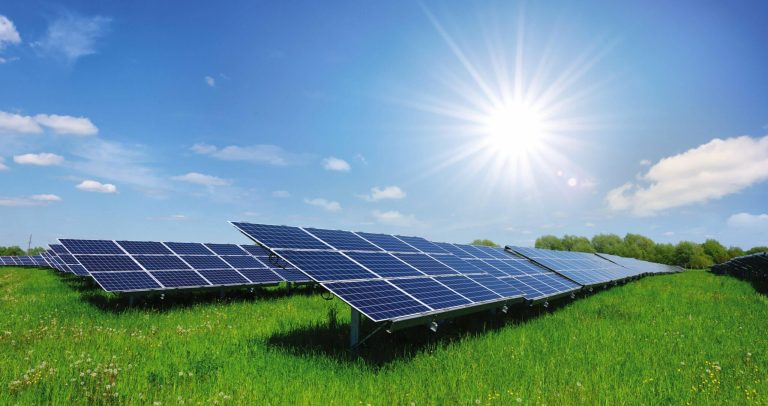
2. System Design
– System Type Selection:
– Photovoltaic (PV) Systems: On-Grid, Off-Grid, or Hybrid.
– Solar Thermal Systems: such as water heaters or CSP (Concentrated Solar Power) plants.
– Technical Calculations: Determining system capacity, selecting panels, inverters, batteries (for Off-Grid systems), and mounting structures.
– Site Assessment: Determining the optimal orientation and tilt angle for panel installation (typically south-facing and aligned with the site’s latitude).
3. Procurement and Equipment Acquisition
– Purchasing Solar Panels: Choosing between monocrystalline, polycrystalline, or thin-film types.
– Purchasing Inverters: Based on system type (central, string, or microinverters).
– Other Equipment: Mounting structures, cabling, smart meters, and monitoring systems.
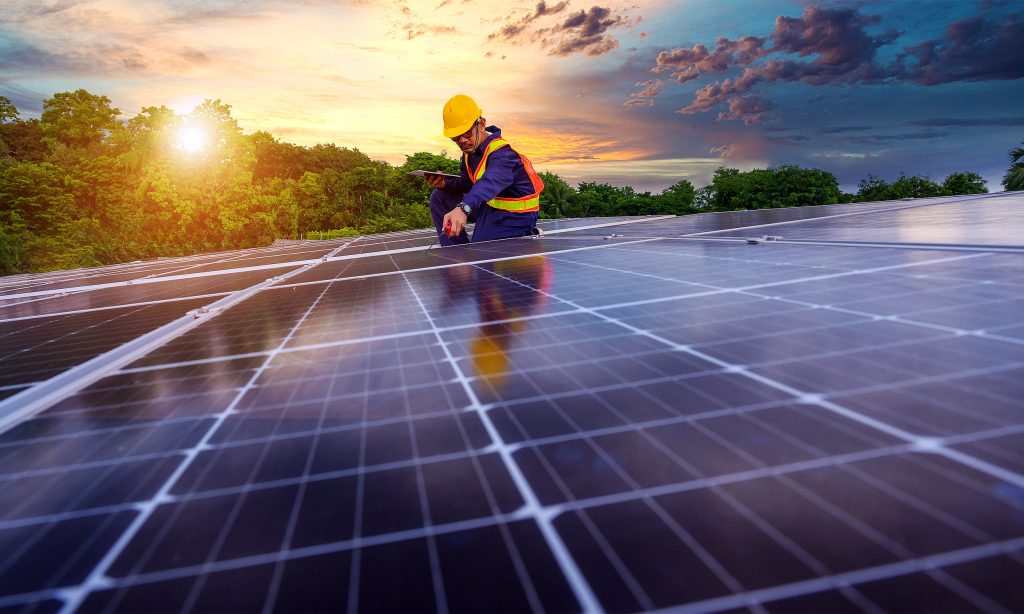
4. Installation and Implementation
– Site Preparation: Land or rooftop leveling, foundation construction (for ground-mounted systems).
– Structure Installation: Mounting metal or aluminum frames.
– Panel Installation: Mounting panels on structures and mechanical fastening.
– Electrical Connections: Wiring between panels, inverters, and the power distribution system.
– Inverter and Auxiliary Equipment Installation: Connection to the grid or batteries.
5. Testing and Commissioning
– Safety Inspection: Insulation testing, connection checks, and grounding system verification.
– Initial Start-Up: Powering on the system and checking inverter operation.
– Calibration and Monitoring: Configuring monitoring systems to track energy production.
6. Operation and Maintenance
– Periodic Maintenance: Cleaning panels, inspecting inverter performance, and checking connections.
– Repairs: Replacing damaged components (e.g., broken panels).
– Performance Monitoring: Using monitoring software to analyze system efficiency.
7. Grid Connection (for On-Grid Systems)
– Contract with the Ministry of Energy: Selling electricity to the national grid (if government incentives exist).
– Installation of Bidirectional Meter: Measuring both injected and consumed electricity.
Benefits of Solar Projects
– Reduction of long-term energy costs.
– Lower pollution and environmental impact.
– Usability in remote areas (Off-Grid).